
Lauderhill Directory Collections
No verified catalog publishes an exact run of Lauderhill-only volumes. That gap matters. Since Lauderhill incorporated in 1959, a sound city directory search tests Fort Lauderdale, Fort Lauderdale and vicinity, Greater Fort Lauderdale, Broward County, telephone books, Polk titles, and Hill-Donnelly or criss-cross titles. A countywide volume may file Lauderhill as a locality or subdivision without putting it in the title.
| Collection | Coverage | Where held | Access |
|---|---|---|---|
| City and phone directories | Exact local runs not verified | Broward County Library | Branch databases or staff request |
| Named census schedules | Public through 1950 | NARA, Ancestry, FamilySearch | Search Broward and prior geography |
| Digital history | 115 collections | Broward Digital Archives | Online browse and search |
| Black Broward history | More than one million items | AARLCC Special Collections | Visit, scan, or research request |
| News and maps | Dates vary | BCL, NSU, UFDC, Florida Memory | Licensed and open databases |
The access chain is wider than the web. Try a Lauderhill branch for Ancestry Library Edition and Fold3, use licensed newspaper files, then ask Historical Archives staff for appointment research, scans, reproductions, and finding aids.
Search Broward Directory Titles
Catalog geography can hide the right volume. Someone in today's Lauderhill footprint may appear under unincorporated Broward, a postal route, a subdivision, or Fort Lauderdale vicinity. Lauderhill did not exist as a city before June 20, 1959. Broward County took effect October 1, 1915, from parts of Dade and Palm Beach counties. Early work may therefore require a predecessor county and a period map.
Give library staff a full name, initials, spouse, street, house number, rough dates, subdivision, and the index wanted. Ask them to check alphabetical and reverse sections, telephone books, yearbooks, obituary indexes, maps, and vertical files. Also request the publisher, exact volumes, gaps, call number, reproduction cost, and whether reverse pages survive. This focused request works better than asking only for old Lauderhill city directories.
Read Lauderhill Directory Entries
A Polk-style entry is compact evidence, not a full life story. It may give a surname, first name or initial, spouse in parentheses, widow notation, occupation, employer, home or business address, phone number, and an owner or renter mark. The letters h and r may distinguish a home from a residence or room. Only the key in that edition controls. Never import a meaning from another publisher or year.
- Criss-cross directory
- A reverse section arranged by street and house number, often followed by an occupant and phone.
- Householder index
- An address-led list used to move from a place to the adult name printed for that year.
- Abbreviation key
- The volume's guide to short forms, symbols, occupations, and owner or renter marks.
Record title, publisher, year, repository, page, exact text, and the key. OCR may break a surname. Check the page image and use a well-read neighbor to locate a bad line. A missing entry can mean a publication gap, canvass omission, new arrival, or refusal, not a proven move.
Reverse Lauderhill Street Listings
A reverse or criss-cross section changes the starting point. Find the street, scan house numbers, and note the listed adult and nearby names. It is useful when the family name changed spelling or only an old address remains.
Do not treat that adult as the full household. Commercial city directories can omit children, boarders, many women except in spouse or widow form, recent arrivals, and those missed by canvassing. For present parcel and deed work, the Lauderhill street directory guide explains official address tools without turning an old entry into a current claim.
Trace Lauderhill Family Years
Build a year-by-year log before reaching a conclusion. City directories work best beside the public census and records that explain ownership or kinship.
- Find the alphabetical entry and copy it exactly.
- Check the reverse section for the address and nearby names.
- Inspect editions before and after it to bracket arrival or departure.
- Compare the household with the public 1950 census.
- Use BCPA and Broward deeds to separate owner from occupant.
- Search newspapers, probate, and death sources for later events.
The 72-year rule makes 1950 the latest named public census in 2026; 1960 is due in 2032. Since incorporation followed that census, use enumeration maps, subdivision names, landmarks, and neighbors to locate today's Lauderhill area.
Lauderhill Branch Database Access
Broward County Library's genealogy and history portal leads to distinct sources. Ancestry Library Edition is available in branches for census, birth, death, immigration, marriage, and military work. Fold3 includes United States city directories, naturalization, and military files. Historical Florida Newspapers has searchable page images. NewsBank adds Florida papers, obituaries, notices, and reports.
Lauderhill Central Park and Lauderhill Towne Centre branches are good entry points. An NSU e-card adds Digital Sanborn Maps, the New York Times from 1851 through 2016, Archives Unbound, immigrant letters, and oral histories. Rules differ by source. Some FamilySearch images require an account or use at a center or affiliate library.
Lauderhill Archives Beyond Print
The Broward Digital Archives forms another historical directory of local lives. Its 115 collections include Black Broward Oral History, Broward County Oral History, and government records. Memories reach back to the 1890s and can reveal schools, churches, shops, migration, and neighborhood names.
The source interface below opens those local collections.
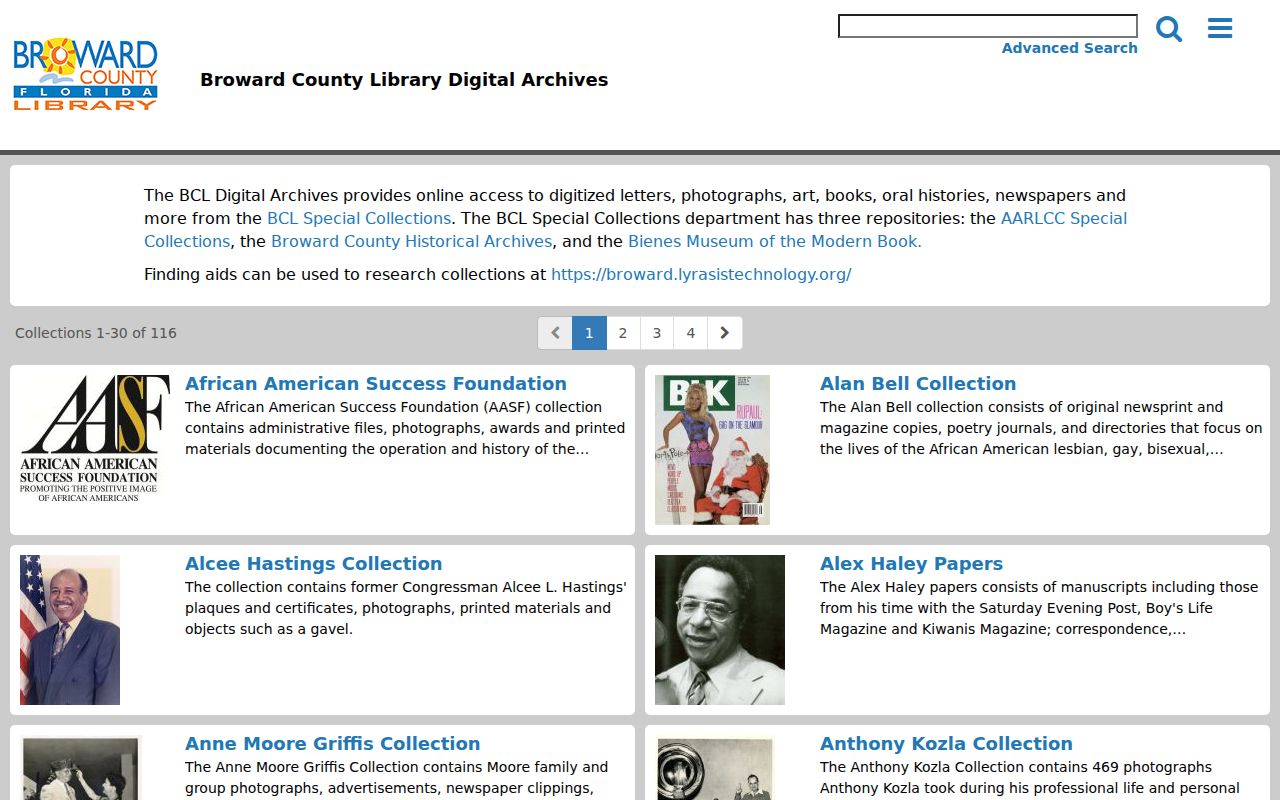
Use an interview as a lead, then confirm its dates and addresses in a city directory, census, deed, or newspaper.
AARLCC holds more than one million manuscripts, photos, newspapers, oral histories, artifacts, and audiovisual items. Its free Digital Memory Lab at 2650 Sistrunk Boulevard helps families digitize cassettes, VHS tapes, slides, and prints. Veterans Connect preserves interviews with local veterans and Gold Star families for Special Collections and possible Library of Congress use.
News, Maps, and Lauderhill Names
Search newspapers by address variants, subdivision, spouse, employer, school, and landmark. Obituaries, announcements, clubs, legal notices, and property ads can connect a person to a place. A legal notice may preserve the lot, block, or subdivision that links an old address to a current parcel.
Digital Sanborn Maps is available through an NSU e-card, but exact Lauderhill sheets and years were not verified. Such maps show footprints, building materials, use, and streets, not residents. Florida Memory, UFDC, and Chronicling America add maps, photos, and papers. Their place labels must match the era.
Lauderhill Records on the Move
Broward's government files have a local story. A major archival addition in 1983 began with records kept in the 1928 courthouse clock tower. They moved to Judge L. Clayton Nance Library, then West Side Grade School, and later Historical Archives at Main Library. The route helps explain why online search is only one access channel.
Digitization staff select and describe rare items, yet donor terms, copyright, or personal details may keep some off the image site. A finding aid can describe more than a browser shows. Contact Special Collections for an appointment, scan, reproduction, or staff search. That step is a normal part of using historical directory collections, not proof that a resident is absent.
Keep a citation log for each result. Note the repository, collection, box or call number, edition, page, access date, and whether the record came from an image, index, transcript, or staff reply. Save the exact search terms that worked. When two sources disagree, compare which one is closest to the event and whether each names a residence, a mailing address, a workplace, or only a relative. This small habit keeps similarly named Broward residents apart and lets another family researcher repeat the path. It also makes gaps clear. An unverified year stays unverified until a catalog record, volume, or librarian confirms it.